Small Bets, Big Thinking: How Aussie Crypto Players Are Using Micro-Staking to Master the Mental Game
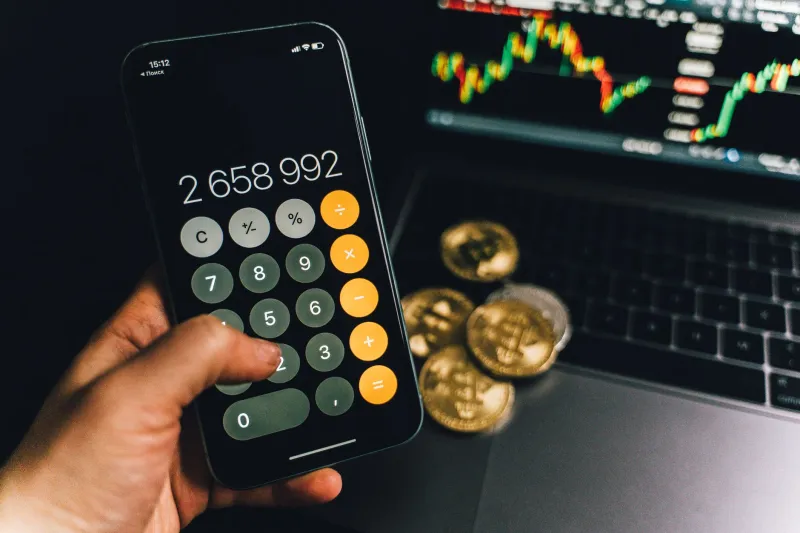
There's a particular kind of Aussie gambler who walks into a session with a plan. Not the bloke who shoves everything on red because his footy team won — the other one. The one nursing a coffee, quietly working through a spreadsheet of session targets and variance buffers. Increasingly, that player isn't sitting at a pub poker table. They're online, wagering in bits and satoshis, and they're running rings around their own emotional impulses.
This is the micro-betting movement, and it's quietly reshaping how Australian crypto gamers think about risk.
What Even Is a 'Bit', and Why Does It Matter?
For anyone newer to the crypto gaming world, a quick refresher: Bitcoin isn't just traded in whole coins. It breaks down into smaller units — millibitcoin (mBTC), microbitcoin (μBTC, also called a 'bit'), and the smallest unit, the satoshi (one hundred-millionth of a Bitcoin). At 7Bit Casino AU, these subdivisions aren't just trivia — they're the building blocks of a genuinely different approach to bankroll management.
When your currency naturally divides into granular increments, it changes how you think about money at the table. A $200 AUD note feels abstract when you slap it down. But structuring your session around, say, 5,000 satoshis per bet? That's a different kind of discipline. You're forced to think in units, not emotions.
The Poker Bankroll Principle, Rebuilt for the Blockchain Era
Seasoned poker players have long followed the 'bankroll management' gospel — the idea that you never risk more than a small percentage of your total funds on any single hand or session. The classic rule for cash games is somewhere between 20 and 30 buy-ins for your chosen stake level. It's a framework designed to survive variance, the statistical reality that even the best players run bad sometimes.
Crypto gaming borrows from this tradition but adds a new wrinkle: the currency itself is volatile. Your bankroll in Bitcoin might be worth significantly more or less in AUD by the time you cash out. That volatility demands an even more conservative approach — and micro-betting delivers exactly that.
Players in Aussie crypto communities have started adapting classic bankroll theory into what some are calling the 'bit-by-bit method'. The core idea is simple: divide your session bankroll into a large number of equal micro-units, then bet only one unit at a time. If you're working with 0.001 BTC for a session, you might divide that into 100 bets of 0.00001 BTC each. The maths forces patience. You literally cannot blow your stack in three rounds.
The Emotional Architecture of Small Stakes
Here's where it gets interesting from a psychological standpoint. One of the most consistent findings in behavioural economics is that loss aversion hits harder when stakes feel significant. When each bet represents a meaningful chunk of your session funds, a bad run triggers panic — and panic leads to chasing, the single most destructive habit in any form of gambling.
Micro-betting short-circuits that panic loop. When your individual bet is small enough that a loss doesn't sting, you stay in the analytical mindset rather than the emotional one. Players who use this approach often describe it as 'playing with your head instead of your gut' — which, honestly, sounds like something a good poker coach would tattoo on the wall.
Sydney-based crypto gamer and community forum regular 'SatoshiSurfer88' described it this way in a recent thread: "I used to blow my whole session budget inside twenty minutes when I was betting big. Now I set my unit size before I even log in. Some nights I'm still playing two hours later with half my bankroll intact. It's boring in the best way."
That 'boring in the best way' sentiment comes up a lot. Extended, measured sessions replace the spike-and-crash emotional rollercoaster that characterises high-stakes impulsive play.
Practical Frameworks Aussie Players Are Actually Using
So what does micro-betting actually look like in practice? A few frameworks have emerged from local crypto gaming communities:
The 1% Rule: Never bet more than 1% of your total session bankroll on a single wager. If you've allocated 0.005 BTC to a session, your max bet is 0.00005 BTC. Simple, scalable, and brutally effective at extending play time.
The Variance Buffer: Set aside 20% of your session funds as an untouchable reserve. You only touch the buffer if your active bankroll is completely depleted — and even then, you reassess before continuing. This mimics the 'stop-loss' logic used in crypto trading.
The Flat Bet Protocol: Resist the urge to increase bet sizes after wins (the gambler's fallacy trap) or decrease them after losses (the emotional shrinkage trap). Flat betting at a fixed unit size across every spin or hand removes variance-chasing from the equation entirely.
Session Ceilings: Set a hard stop at both ends — a loss limit (e.g., if you drop 40% of your session funds, you log off) and a win target (e.g., if you're up 60%, you bank the profit and walk). Crypto gaming platforms make this easier because you can track your balance in real time with precision.
The 7-Bit Mindset: Precision Over Impulse
There's something philosophically aligned between the micro-betting approach and the broader ethos of crypto-native gaming. Blockchain technology is, at its core, about precision — immutable records, transparent outcomes, mathematically verifiable fairness. When you bring that same precision to your bankroll strategy, you're essentially applying the values of the technology to your behaviour at the table.
The '7-bit' framing isn't just a nod to the casino brand — it captures something real about how granular, systematic thinking can outperform gut-feel gambling over the long run. Seven bits of information can represent 128 distinct values. Seven deliberate decisions in a session strategy can represent the difference between a disciplined player and a tilt-prone one.
When Micro-Betting Doesn't Work
Fair's fair — this approach has its limits. Micro-betting is a variance management tool, not a winning system. It won't change the house edge on any given game, and no amount of disciplined unit sizing will turn a negative expected value game into a profitable one over infinite sessions.
What it does do is give you more swings of the bat. More data points. More opportunities for the variance to smooth out in your favour. And critically, it keeps you in the right headspace to make rational decisions rather than emotional ones.
It also requires genuine pre-commitment. Deciding your unit size after you've already started playing — especially after a bad beat — is almost useless. The discipline lives in the setup, not the session.
Playing the Long Game in a Short-Attention Span World
Australian crypto gamers are increasingly sophisticated. The community forums, Discord servers, and Telegram groups are full of people comparing strategies, debating volatility management, and sharing session logs with the kind of rigour you'd expect from a trading desk, not a casino floor.
Micro-betting is part of that maturation. It's a signal that a growing cohort of local players isn't here for the rush — they're here for the long game. They've internalised the lesson that the best sessions aren't always the most exciting ones. Sometimes the best session is the one where you're still playing at midnight, unit by careful unit, with your bankroll intact and your head clear.
That's the philosophy. Small bets, sharp thinking, and enough patience to let the game come to you.