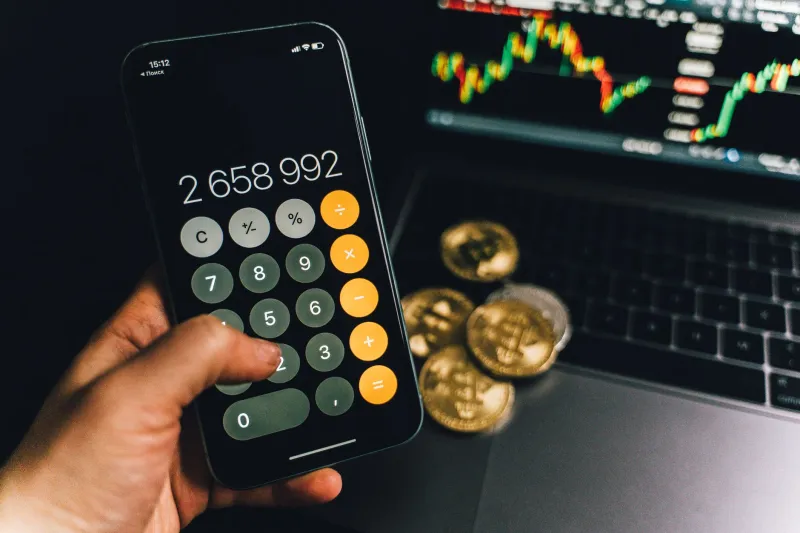
Seven and the City: Do Lucky Numbers Actually Give Aussie Crypto Punters an Edge?

There's something deeply satisfying about the number seven. It pops up in folklore, religion, sport, and — if you've spent any time on a crypto casino platform — it's practically hardwired into the DNA of the gaming experience itself. Here at 7Bit Casino AU, the name isn't just a brand choice. For a growing crew of Aussie players, it's become a kind of philosophy.
But here's the real question: when you're wagering Bitcoin on a provably fair game, does leaning into lucky numbers actually give you any kind of meaningful edge? Or are we just wired to find patterns where none exist?
We spoke to a handful of local players and dug into some probability theory to find out.
The Human Brain Is a Pattern Machine
Let's start with the uncomfortable truth. The human brain is extraordinarily good at spotting patterns — even when they aren't there. Psychologists call it apophenia, and it's the same cognitive quirk that makes you see faces in clouds or think the pokies are "due" for a payout after a cold streak.
Jake, a 34-year-old software developer from Brisbane who's been playing crypto casino games for about three years, puts it plainly: "I know, rationally, that the RNG doesn't care what number I pick. But I still gravitate toward seven every single time. It just feels right. And honestly? When it hits, the dopamine rush is real."
That dopamine hit is exactly the point. Whether or not the number seven has any mystical pull, the belief that it does changes how Jake engages with the game. He's more focused, more patient, more deliberate in his betting. Whether that translates to better outcomes is another matter entirely.
What Provably Fair Actually Means for Number Chasers
One of the genuinely brilliant things about blockchain-based gaming is the concept of provably fair algorithms. Unlike traditional online casinos where you're essentially trusting the house's word, provably fair systems use cryptographic hashing to let players verify that each outcome was determined independently — before the bet was even placed.
For lucky number believers, this cuts both ways.
On one hand, it completely demolishes the idea that any number has a statistical advantage. A provably fair dice roll has no memory, no preference, and no mystical alignment with the number seven or any other digit. The math is the math.
On the other hand, provably fair transparency actually empowers players to track their own results. Mel, a crypto gaming enthusiast from Melbourne who runs a small Discord community for Aussie blockchain gamers, says she uses the verifiable history of her sessions to spot her own biases.
"I went back through about six months of my dice game history and checked how often I was betting on specific number ranges," she explains. "Turns out I was unconsciously clustering my bets around multiples of seven. Didn't change my win rate at all, but it was fascinating to see the pattern laid out in black and white."
Numerology Meets Bitcoin: A Growing Subculture
It might sound niche, but there's a surprisingly active subculture of crypto players who blend numerology with betting strategy. Reddit threads, Telegram groups, and Discord servers dedicated to crypto casino play are filled with discussions about "angel numbers," Fibonacci sequences, and the supposed significance of dates and timestamps in blockchain transactions.
Some of this is tongue-in-cheek. Plenty of it is genuine belief. And a small but earnest cohort is trying to fuse numerological frameworks with legitimate bankroll management strategies.
Dan, a 28-year-old from Sydney who describes himself as a "recreational crypto punter with a maths degree," has mixed feelings about the whole thing. "The Fibonacci angle is interesting because it's a real mathematical sequence that appears in nature. Using it as a betting progression system isn't inherently irrational — it's just not going to overcome the house edge. But it gives people a framework, and frameworks help with discipline."
That last point is worth sitting with. Whether it's the number seven, the Fibonacci sequence, or a personally significant date, having any structured approach to betting tends to produce better outcomes than pure impulse wagering. Not because the numbers are lucky, but because structure itself encourages discipline.
Confirmation Bias and the Casino Floor
Confirmation bias is the tendency to notice and remember information that confirms what we already believe, while discounting evidence to the contrary. In a casino context, this is absolutely everywhere.
If you believe seven is your lucky number and you win on a seven, you remember it vividly. If you lose on a seven, it was just bad luck — an exception. If you win on a four, it barely registers. The pattern you believe in gets reinforced regardless of what the data actually shows.
Mel from Melbourne has seen this play out repeatedly in her community. "Someone will post about how they've had an incredible run betting on certain numbers, and they'll have a whole theory about why. Then someone else will ask them to share their full session history and suddenly the edge disappears completely. It's not that they're lying — they genuinely believe it. That's confirmation bias doing its thing."
So Should You Bet on Seven?
Honestly? If it makes the experience more enjoyable, go for it. Crypto casino gaming at its best is entertainment, and there's nothing wrong with adding a personal ritual or preference to the mix — as long as you're playing within your means and understand the actual probabilities at play.
The 7Bit brand has always carried a certain energy around that number, and for good reason. Seven has cultural weight across almost every major civilisation on earth. Lucky number seven in Western tradition, the seven colours of the rainbow, seven notes in the musical scale — the associations run deep. Tapping into that feeling while you're playing can genuinely enhance the experience.
Just don't mistake the feeling for an edge.
Jake from Brisbane sums it up well: "I play with Bitcoin because I believe in the technology. I bet on sevens because it's fun. I manage my bankroll carefully because that's what actually matters. The lucky number is just the vibe."
Playing Smart in a Provably Fair World
The real takeaway from all of this isn't that numerology is useless or that pattern recognition is always a trap. It's that awareness is your most valuable asset at a crypto casino.
Understanding confirmation bias means you can catch yourself constructing false narratives. Knowing how provably fair algorithms work means you can verify outcomes rather than mythologise them. And appreciating the genuine role that structure and ritual play in disciplined betting means you can harness the psychological benefits of lucky numbers without letting them override your judgement.
Seven might not have any special power over an RNG. But the mindset you bring to the table? That's a different story entirely.
And hey — it's still a pretty great number.